DARPA INVENTIONS EXPLAINED
A LONG HISTORY OF INNOVATION


DARPA, the Defense Advanced Research Projects Agency, was founded in 1958 after the launch of Sputnik. Over 60 years of technological innovations from DARPA have led us to where we are now with quantum computing. They have pioneered massive undertakings like the modern internet and GPS. Definitely an agency that deserves the public’s attention.
High-risk, high-reward has become DARPA’s motto.
Check out a timeline of DARPA’s innovations.
ARPANET - PREDECESSOR TO THE INTERNET
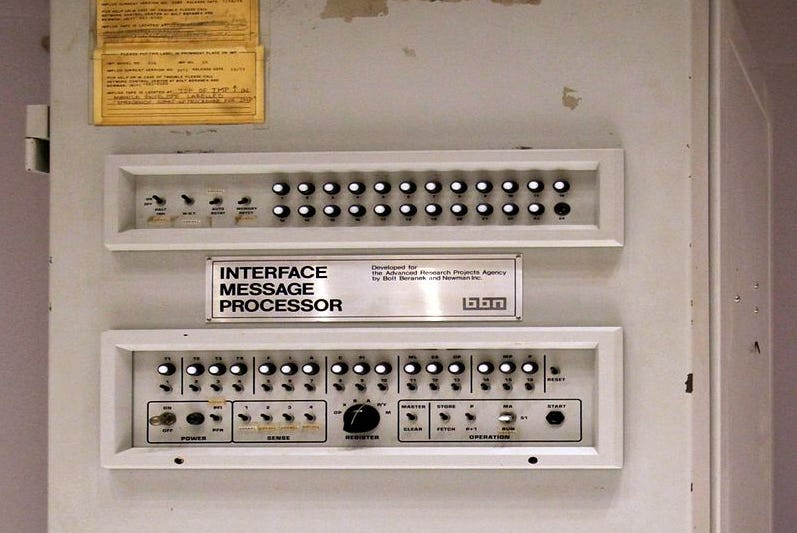
“ARPA research played a central role in launching the Information Revolution. The agency developed the conceptual basis for ARPANET, a pioneering network for sharing digital resources among geographically separated computers. It’s initial demonstration in 1969 led to the Internet, whose world-changing consequences unfold on a daily basis today. A seminal step in this sequence took place in 1968 when ARPA contracted Bolt Beranek and Newman Inc. [now known as Raytheon] to build the first routers, which one year later enabled ARPANET to become operational.” - SOURCE
“DARPA also provided many of the essential advances that made possible today’s computers and communications systems, including seminal technological achievements that support the speech recognition, touch-screen displays, accelerometers, and wireless capabilities at the core of today’s smartphones and tablets. DARPA has also long been a leader in the development of artificial intelligence, machine intelligence and semi-autonomous systems. DARPA’s efforts in this domain have focused primarily on military operations, including command and control, but the commercial sector has adopted and expanded upon many of the agency’s results to develop wide-spread applications in fields as diverse as manufacturing, entertainment and education.” - SOURCE
SOURCES: DARPA and the Internet Revolution By Mitch Waldrop
www.britannica.com/topic/ARPANET
medium.com/written-with-ai/a-brief-history-of-the-internet-from-arpanet-to-the-early-2000s-d3dd4a5f908
www.darpa.mil/about-us/timeline/modern-internet
ATLAS - HUMANOID ROBOT
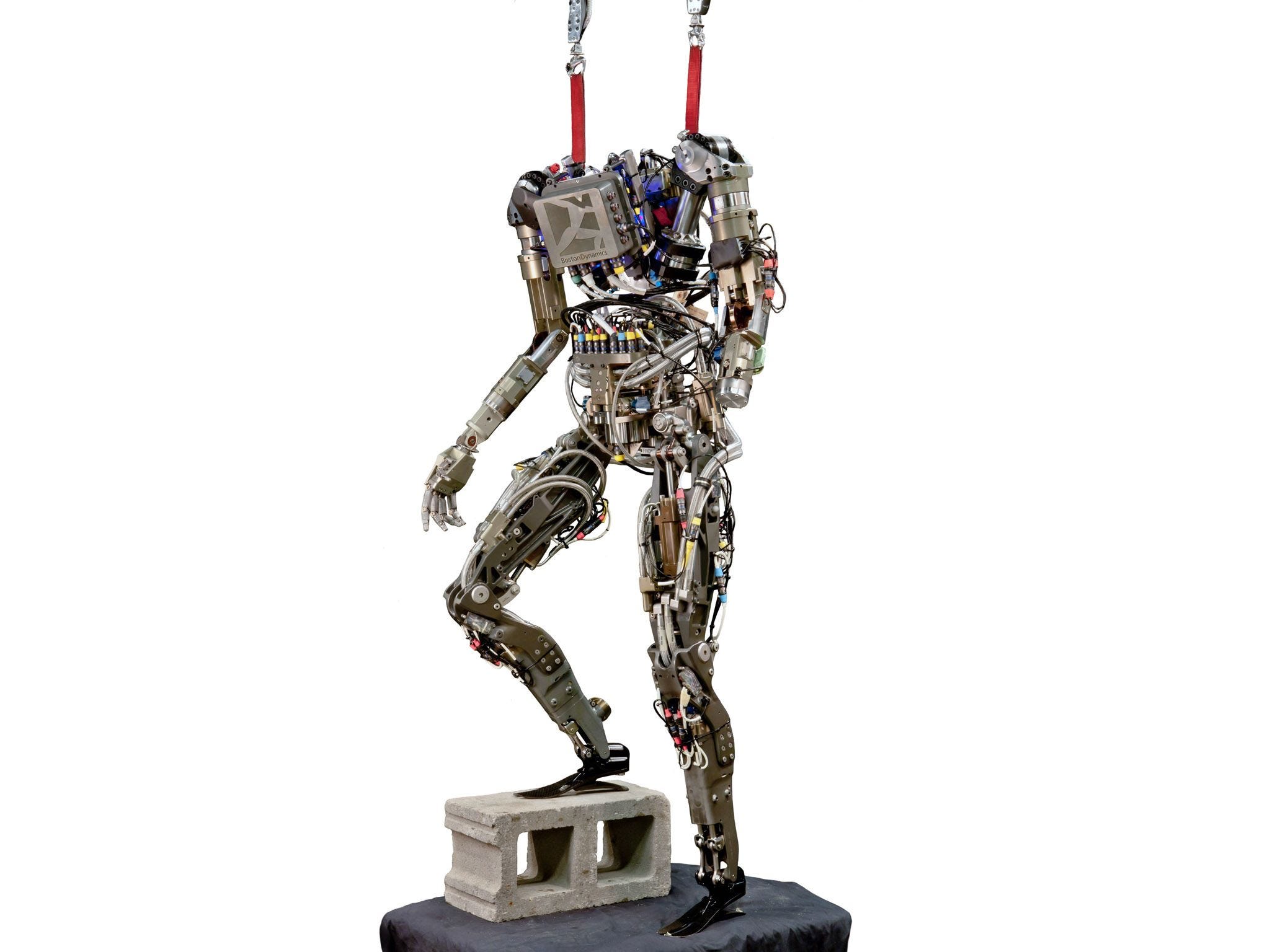
“The Atlas disaster-response robot made its public debut on July 11, 2013. In its original form, the 6’2”, 330-lb. humanoid robot—developed for DARPA by Boston Dynamics of Waltham, Mass.—was capable of a range of natural movements. A tether connected the robot to both an off-board power supply and computer through which a human operator issued commands. Atlas was created for use in the DARPA Robotics Challenge (DRC), a prize competition intended to speed the development of advanced robotic hardware, software, sensors and control interfaces so that robots might assist humans in responding to future natural and man-made disasters. Seven of the Atlas robot platforms were presented to qualifying teams from an early, simulation-based round of the DRC that focused on software development. At the time of its debut, ATLAS was one of the most advanced humanoid robots ever built, but it was essentially a physical shell for the software brains and nerves that the teams developed. The teams used their Atlas robots to compete in the live DRC Trials in December 2013, where they attempted to guide the robots through a series of physical tasks representative of what might be encountered in disaster zones. In preparation for the June 2015 DRC Finals, to be held in Pomona, Calif., DARPA called on Boston Dynamics to improve Atlas’ power efficiency, switch to on-board power and wireless communication, strengthen its limbs and improve its durability, and update its appearance. These tasks were completed in mid-2015.”
SOURCES: www.darpa.mil/about-us/timeline/debut-atlas-robot
www.wired.com/2011/02/darpas-cheetah-bot-designed-to-chase-human-prey/
BigDog - ROBOT DOGS
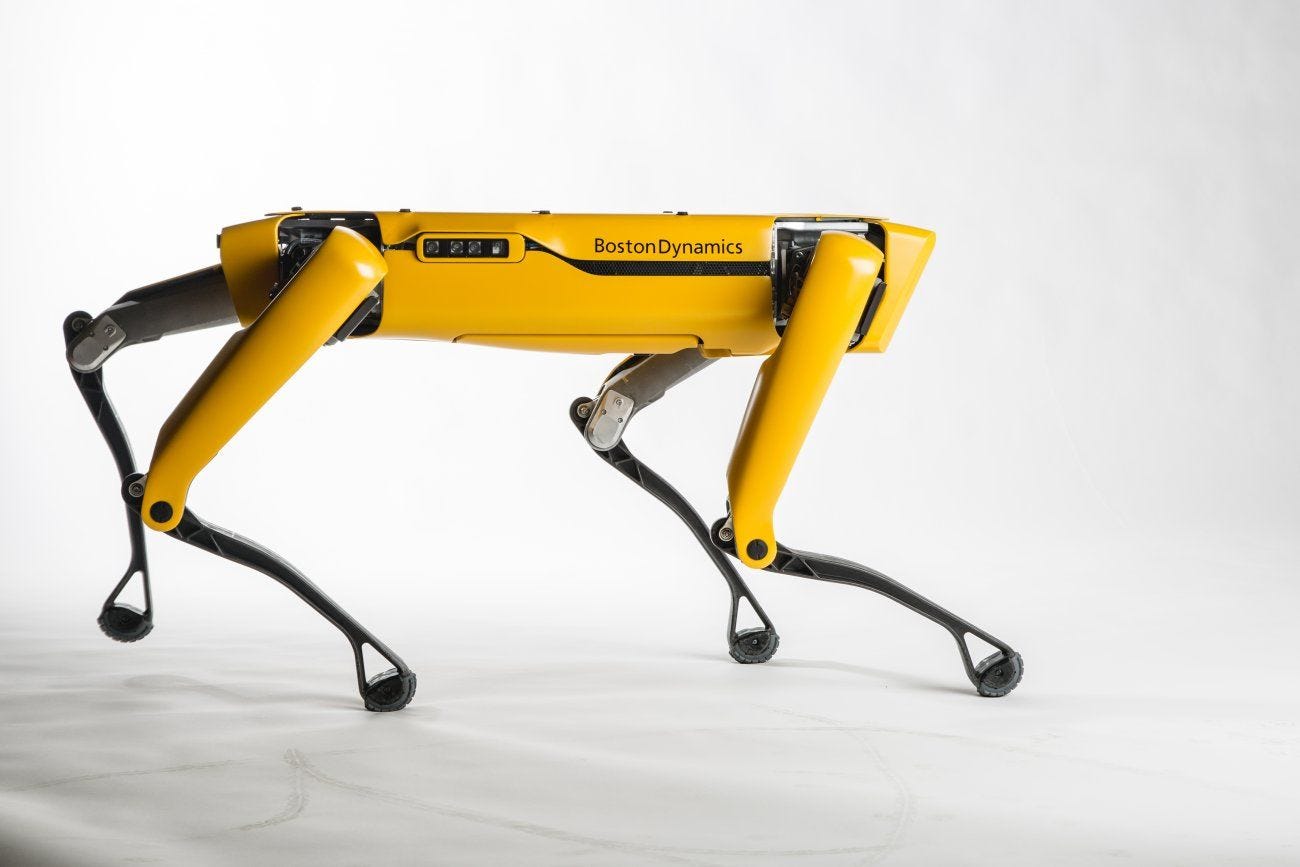
With its sights on robotic pack mules to help warfighter in operations, DARPA initiated a program that yielded BigDog. The robot’s on-board computer controls locomotion, processes sensors, and handles communications with the user. BigDog’s control system keeps it balanced, manages locomotion on a wide variety of terrain, and does navigation. Sensors for locomotion include joint position, joint force, ground contact, ground load, a gyroscope, LIDAR, and a stereo vision system. Other sensors focus on the internal state of BigDog, monitoring the hydraulic pressure, oil temperature, engine functions, battery charge, and others. In demonstrations, BigDog ran at 10 kmh, climbed slopes up to 35 degrees, walked across rubble, climbed muddy hiking trails, walked in snow and water, and carried up to 150kg loads.
Development of the original BigDog robot was funded by DARPA. Work to add a manipulator and do dynamic manipulation was funded by the Army Research Laboratory's RCTA program.
SOURCES: www.darpa.mil/about-us/timeline/big-dog
BOLT - SEAMLESS REAL-TIME LANGUAGE TRANSLATOR
“Expanded global access to diverse means of communication is resulting in more information being produced in more languages more quickly than ever before. The volume of information encountered by DoD, the speed at which it arrives, and the diversity of languages and media through which it is communicated make identifying and acting on relevant information a serious challenge. At the same time, there is a need to communicate with non-English-speaking local populations of foreign countries, but it is at present costly and difficult for DoD to do so.
Natural language processing technologies have the potential to enable cross-cultural communication, but current technology is insufficient to the task of handling informal language. In October 2011, DARPA launched the Broad Operational Language Translation (BOLT) program to attempt to create new techniques for automated translation and linguistic analysis that can be applied to the informal genres of text and speech common in online and in-person communication.
BOLT is aimed at enabling communication with non-English-speaking populations and identifying important information in foreign-language sources by: 1) allowing English-speakers to understand foreign-language sources of all genres, including chat, messaging and informal conversation; 2) providing English-speakers the ability to quickly identify targeted information in foreign-language sources using natural-language queries; and 3) enabling multi-turn communication in text and speech with non-English speakers. If successful, BOLT will deliver all capabilities free from domain or genre limitations.”
SOURCE: www.darpa.mil/program/broad-operational-language-translation ALT LINK www.businessinsider.com/15-current-darpa-innovations-2014-7#technologies-that-eliminate-language-differences-8
ELM - ENGINEERED LIVING MATERIALS
“The structural materials that are currently used to construct homes, buildings, and infrastructure are expensive to produce and transport, wear out due to age and damage, and have limited ability to respond to changes in their immediate surroundings.
Living biological materials—bone, skin, bark, and coral, for example—have attributes that provide advantages over the non-living materials people build with, in that they can be grown where needed, self-repair when damaged, and respond to changes in their surroundings.
The inclusion of living materials in human-built environments could offer significant benefits; however, today scientists and engineers are unable to easily control the size and shape of living materials in ways that would make them useful for construction.
DARPA is launching the Engineered Living Materials (ELM) program with a goal of creating a new class of materials that combines the structural properties of traditional building materials with attributes of living systems. Living materials represent a new opportunity to leverage engineered biology to solve existing problems associated with the construction and maintenance of built environments, and to create new capabilities to craft smart infrastructure that dynamically responds to its surroundings.”
SOURCE: www.darpa.mil/news-events/2016-08-05
www.armytimes.com/off-duty/military-culture/2020/09/04/8-weird-darpa-projects-make-science-fiction-seem-like-real-life/
EXACTO - SELF-GUIDED BULLETS
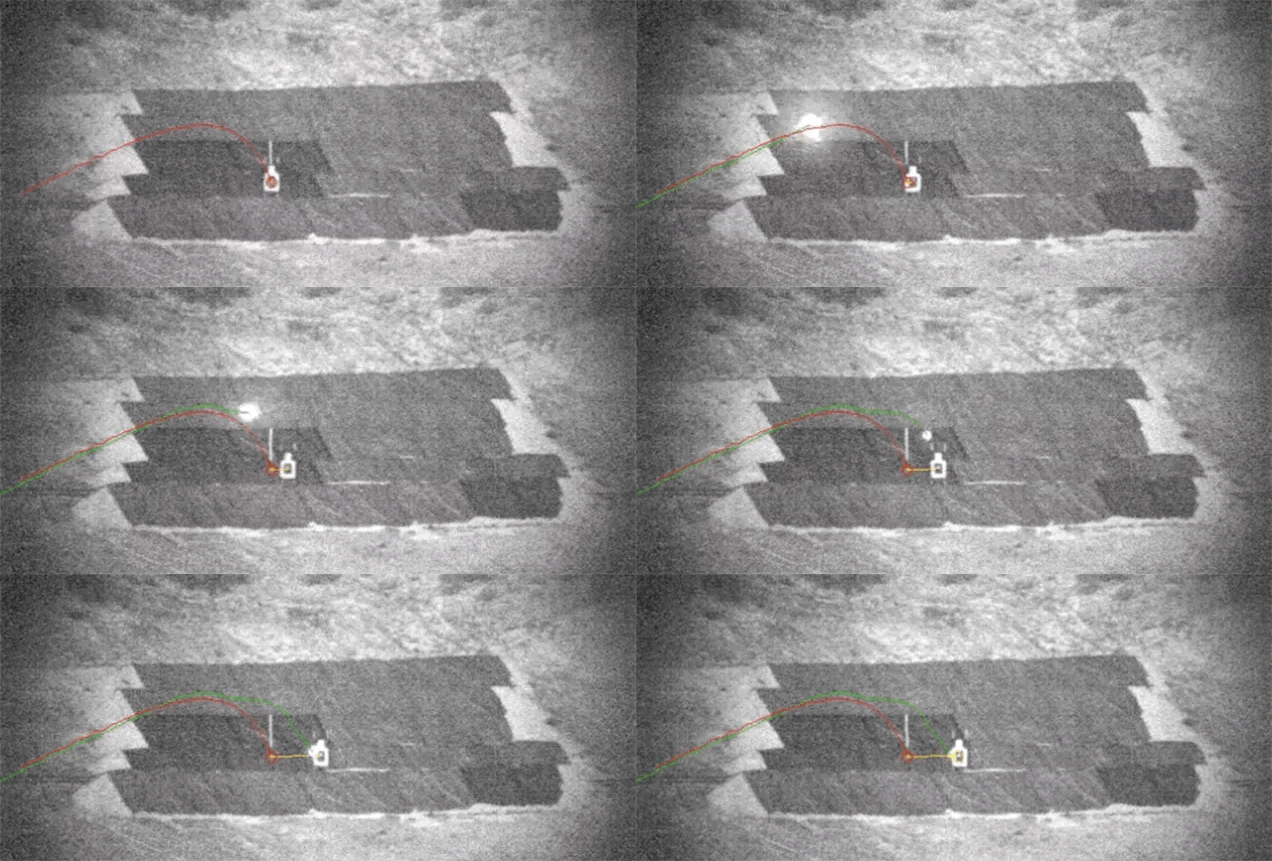
“The military's first smart, self-guided bullets. EXACTO [EXtreme ACcuracy Tasked Ordnance] bullets are able to change their path during flight to correct for the movement of a target or any other factors that might have driven the bullet off course.” - SOURCE
“For military snipers, acquiring moving targets in unfavorable conditions, such as high winds and dusty terrain commonly found in Afghanistan, is extremely challenging with current technology. It is critical that snipers be able to engage targets faster, and with better accuracy, since any shot that doesn’t hit a target also risks the safety of troops by indicating their presence and potentially exposing their location.
The EXACTO system sought to improve sniper effectiveness and enhance troop safety by allowing greater shooter standoff range and reduction in target engagement timelines. The objective of the EXACTO program was to revolutionize rifle accuracy and range by developing the first ever guided small-caliber bullet. The EXACTO 50- caliber round and optical sighting technology was developed to greatly extend the day and nighttime range over current state-of-the-art sniper systems. The system combined a maneuverable bullet and a real-time guidance system to track and deliver the projectile to the target, allowing the bullet to change path during flight to compensate for any unexpected factors that may drive it off course.” - SOURCE
SOURCES: www.darpa.mil/program/extreme-accuracy-tasked-ordnance
www.businessinsider.com/15-current-darpa-innovations-2014-7#bullets-that-can-change-direction-in-flight-1
Watch DARPA's New Self-Guided Bullets Turn in Mid-Flight, Following Their Target
Personal Assistant That Learns (PAL) - SIRI

“Through its Personalized Assistant that Learns (PAL) program, DARPA created cognitive computing systems to make military decision-making more efficient and more effective at multiple levels of command; reduce the need for large command staffs; and enable smaller, more mobile, and less vulnerable command centers. DARPA worked with military users to refine PAL prototypes for operational use, and with the defense acquisition community to transition PAL technologies into military systems.
Elements of DARPA’s PAL program, for example, were integrated into the U.S. Army’s Command Post of the Future, which integrates data from different feeds into a single display and today contributes to more timely decisions and coordinated operations on a daily basis around the world. Advances stemming from the agency’s PAL program were applied not only for military users but also to enable voice-based interaction with civilian handheld devices. This led to the 2007 launch of Siri Inc., later acquired by Apple Inc., which further advanced and then integrated the Siri/PAL technology into the Apple mobile operating system.”
Sources: www.darpa.mil/about-us/timeline/personalized-assistant-that-learns
TRANSIT Satellite - THE PREDECESSOR TO GPS